




AI has made most applicant tracking system software look almost identical to a full recruitment management system, since both now offer resume parsing, scoring, and candidate matching. The real difference is no longer about features. It comes down to which workflow the platform was built to own: attracting and screening candidates, or running hiring from requisition to offer. To tell them apart, ask what the platform does after it shortlists a candidate. If it hands off from there, it’s built as an ATS. If it keeps running the process, it’s an RMS.
Every applicant tracking system demo sounds the same these days. Resume parsing, AI scoring. Smart candidate matching. Five years ago, those features lived only inside a full recruitment system. Now they ship in nearly every piece of applicant tracking system software, making two very different tools look identical on a sales call.
That similarity creates a real problem for HR leaders choosing between platforms. Feature lists no longer show what a tool was built to do, whether it markets itself as an AI applicant tracking system or a complete Recruitment Software. What still separates these tools is the workflow they were designed to own, and this piece gives you one direct question that settles it.
The Old ATS vs RMS Divide Doesn’t Hold Anymore
The old distinction was simple. An ATS screened candidates, and a recruitment management system ran the entire hiring process from requisition to offer letter. AI resume parsing and scoring have since become standard in both categories, so that line has effectively disappeared.
Vendors on both sides now market smart shortlisting and predictive fit scores as headline features. A buyer scanning ATS systems and recruitment platforms side by side today will find nearly identical language on both feature pages.
What Actually Separates These Platforms Now
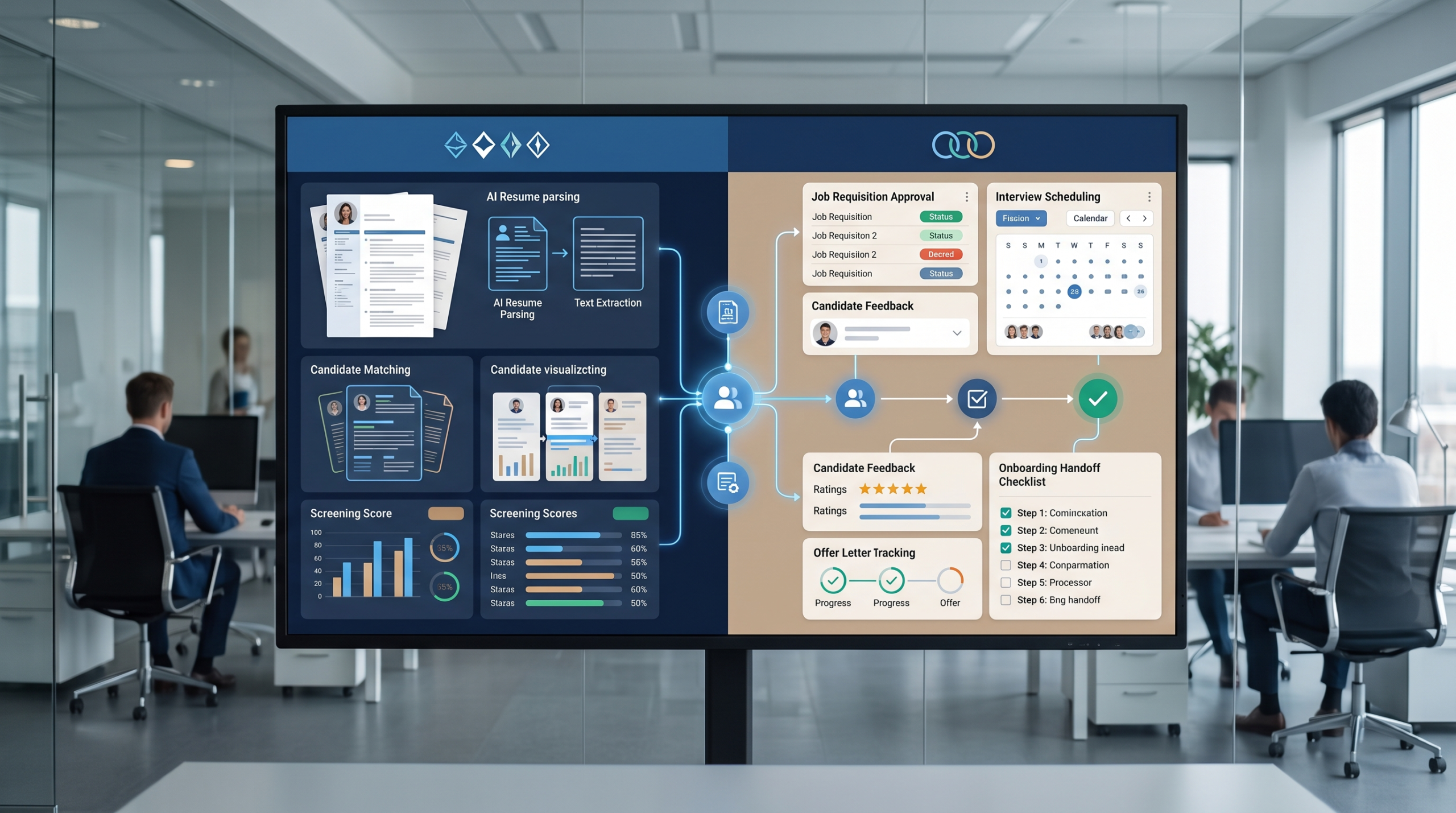
The real difference sits in workflow ownership, not feature lists. Some ATS systems are built to attract and screen candidates well, then hand off the rest of the process. Others are built to run the full hiring operation from the day a role opens to the day an offer is signed.
That difference shows up in a few concrete places:
- Requisition approvals: owned end-to-end, or left to email threads
- Interview scheduling and feedback: built in, or bolted on
- Offer generation and tracking: native, or exported elsewhere
- Post-hire reporting: hiring-stage analytics, or basic pipeline counts
If a platform stops short after shortlisting, it was built as a screening tool. If it keeps functioning through offer and onboarding handoff, it was built to run recruitment operations.
How to Test Any Platform Before You Sign
Ask this before signing any contract: what happens inside the platform after a candidate is shortlisted? The answer tells you more than any comparison sheet.
Run this quick test during your next demo:
- Ask the vendor to show requisition approval, not just candidate scoring.
- Ask how interview feedback gets collected and stored.
- Ask if offer letters are generated and tracked inside the platform.
- Ask what reporting looks like once a hire is made, not just during sourcing.
An AI applicant tracking system that only answers the first question is a screening tool with AI on top. One that walks through the whole sequence was built to run hiring operations, regardless of what the vendor calls it.
Why Applicant Tracking System Software Categories Still Matter
Choosing the wrong category costs more than a mismatched feature list. Teams that buy screening tools expecting full recruitment operations end up stitching together spreadsheets, email approvals, and a separate offer-letter process. That slows every hire and splits reporting across three systems.
HR teams that get this right start by mapping their actual hiring workflow, then match it to a platform built for that scope. FlowHCM’s recruitment module was built around requisition-to-offer ownership rather than screening alone, which is why teams use it to close the handoff gaps above instead of layering another AI recruitment software tool on top of their stack.
The Real Question Before You Buy
Skip the feature comparison and ask what the platform does after shortlisting. That single question reveals whether you’re looking at a screening tool or a full recruitment operating system, regardless of the AI branding. Choose based on the workflow you need to run, not the label on the pricing page, and your next applicant tracking system software will actually fit how your team hires.