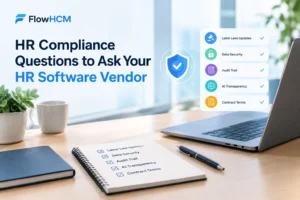



HR compliance depends on asking the right questions before you choose an HR software vendor. Businesses should ask how the vendor tracks labor law changes, protects employee data, keeps audit trails, explains AI decisions, and assigns liability in contracts. Written answers in these five areas show whether the software will reduce legal risk or create it.
One missed labor law update can lead to months of legal trouble. Many HR teams learn this the hard way. They choose a tool, sign the contract, and find the gaps later. Fines, lawsuits, and lost trust follow quickly. Strong HR compliance should start before the purchase, not after.
Most buyers ask about price, features, and support. Few ask how a vendor handles changing laws, data privacy, or audit records. Those answers decide whether your HR software protects you or exposes you. Use the questions below on your next vendor call. They will help you spot a weak partner fast and help your team build a safer workplace for every employee. Compliance is not a feature. It is a promise your vendor must keep.
Labor Laws Change Fast. Who Tracks Them for You?
A reliable vendor updates its system within days of a legal change and shows you proof. Rules on wages, overtime, and tax shift often, and each shift affects your HR compliance risk. Ask how the vendor watches for changes and who approves each update.
Request these three items:
- A dated log of past legal updates
- The name of the team that reviews new rules
- Written notice before any update goes live
Powerful HCM software keeps you informed, so your team never learns about a rule change from an auditor.
Your Employee Data Deserves Proof, Not Promises
Ask for security certifications in writing, because verbal assurances protect no one. Employee files hold CNIC numbers, salaries, and health details. If a vendor leaks them, your company faces the legal fallout.
Ask where data is stored, who can see it, and how fast the vendor reports a breach. Strong HR management software also limits access by role, so a line manager never opens payroll files.
Does Your Audit Trail Support HR Compliance?
Yes, but only if it records who changed what, and when. In an inspection, this record proves your team followed the rules. Without it, you depend on memory and email chains.
AI Can Help, but Can It Explain Itself?
AI in HR management is safe only when you can explain every recommendation it makes. A tool that screens resumes or flags absences must not hide its logic. Regulators and employees will both ask how a decision was reached, and that answer is now part of HR compliance.
Put these questions to your vendor:
- How is the model tested for bias?
- Can a human review and override each result?
- Is employee data used to train outside models?
Also ask whether the HR solutions you are considering keep a record of every AI-assisted decision.
The Contract Holds the Answers That Matter
Your contract should say who is responsible if the system causes a compliance failure. Many buyers skip this clause and regret it later. Also check exit terms, data return, and support during audits.
Then test how the tool handles attendance records and payroll together, since errors there cause the most HR compliance disputes. Ask whether the HRMS software connects both without manual exports. Any HCM software worth buying will welcome these questions. A vendor like FlowHCM should be able to answer each one in writing.
Buy Safer: Let Your Questions Do the Work
Strong HR compliance depends on the questions you ask before you sign. Ask about law updates, data security, AI transparency, and contract terms. The right HR solutions partner will answer clearly and in writing. Take this list to your next vendor meeting, and hold every answer to that standard.