

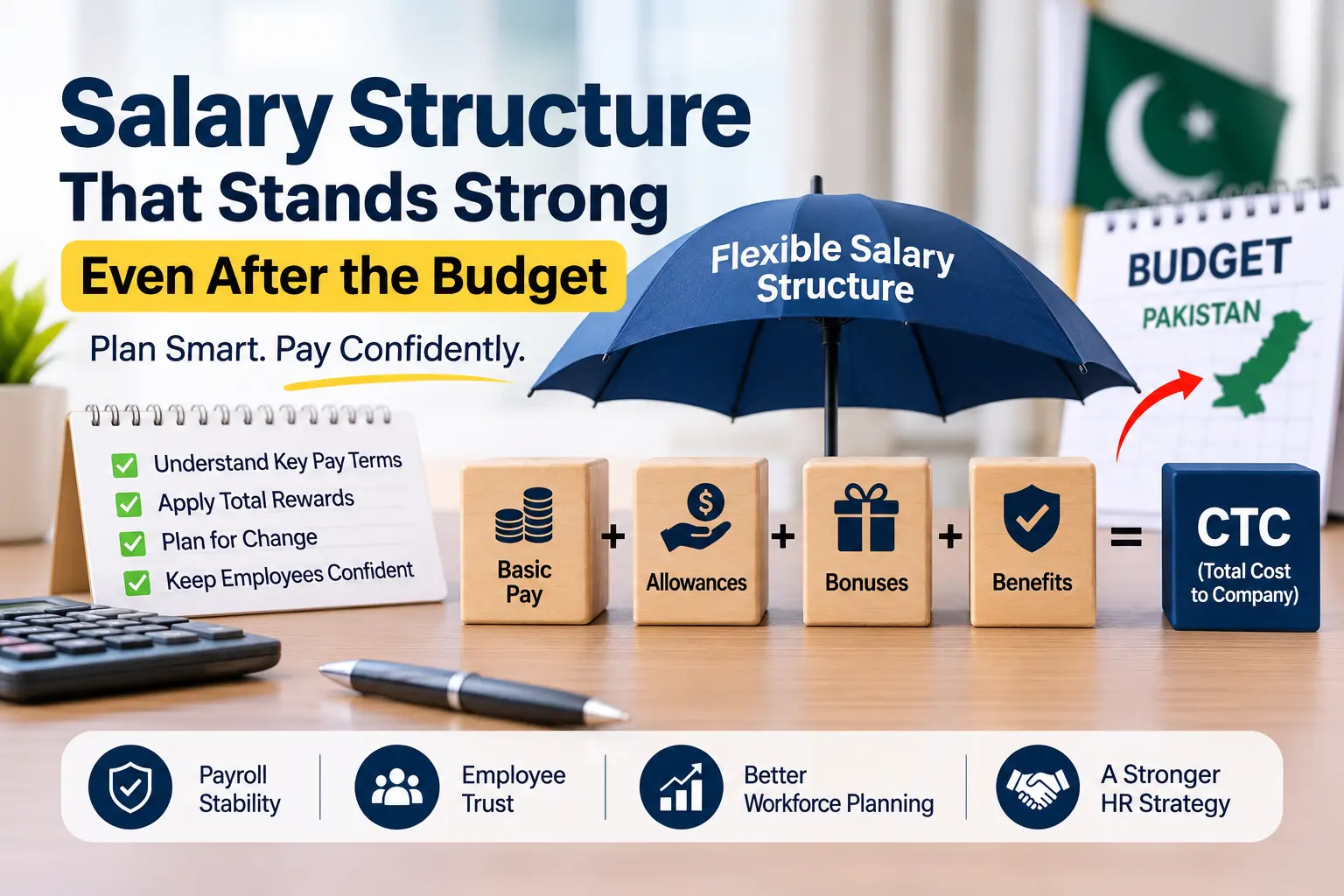
A salary structure breaks down an employee’s total pay into basic pay, allowances, bonuses, and benefits. Basic is the fixed core, gross is basic plus allowances, net is take-home after deductions, and CTC is the full employer cost. A flexible salary structure protects employees from payroll shocks when budget or tax rules change.
The federal budget is announced, and within days your payroll team must explain a smaller take-home to employees. The tax change is not the real cause. The cause is a salary structure that was never tested against change. When one component moves, every figure tied to it moves too, and employees see a lower number with no warning.
In Pakistan, salaried tax slabs and allowance rules can shift every June. Rules will keep changing, so HR must design for change instead of reacting to it. This guide shows how to build pay that holds under any rule, how to apply a Total Rewards lens, and how to keep employees confident when payslips change.
Payroll Panic Starts Before the Budget Is Announced
Payroll panic is a planning gap. Teams wait for the rule, then rush to patch pay, instead of testing their design against likely changes in advance.
A fragile salary structure shows these warning signs:
- Low basic pay, with salary allowances carrying most of the package
- Allowances with no written purpose
- No scenario test before budget day
- Employee messages drafted after payslips go out
Four Pay Terms, One Salary Structure
These four terms describe the same pay at four different stages. Mixing them up confuses employees and auditors alike.
| Term | Plain definition | What it tells you |
| Basic | Fixed core pay before any add-ons | The base for provident fund, gratuity, and many benefits |
| Gross | Basic plus all allowances, before deductions | Total pay earned in a month |
| Net | Gross minus tax and statutory deductions | Take-home pay that reaches the bank |
| CTC | Gross plus employer costs such as provident fund contribution, gratuity, and insurance | Full annual cost to the company |
The gap between basic salary and gross salary matters most. Basic feeds retirement and gratuity benefits, so a change there moves benefits, not just monthly cash. Most budget explainers stop at the tax slab. A resilient salary structure goes further and asks what happens to every other figure when basic moves.
Give Every Allowance One Job
Each salary allowance should solve one clear need, such as housing, transport, or meals. If you cannot state the purpose in one sentence, the allowance is a risk. Unexplained components draw attention first when rules change.
Review each allowance once a year, and keep a one-line policy note beside it. Compare basic salary vs. gross salary at every review so the gap never drifts unnoticed.
The Total Rewards Model Keeps Pay Steady Under Pressure
The Total Rewards Model treats pay as one part of a wider package. A salary structure built on it can absorb a rule change, because HR can rebalance other elements instead of cutting take-home pay.
Apply it in four moves:
- Compensation: Hold basic at a steady share of CTC, then set allowances around it.
- Benefits: Use insurance, retirement contributions, and leave to add value.
- Development: Fund training that raises long-term earning power.
- Recognition: Link bonuses and awards to clear goals.
Then share the full package. A transparent CTC breakup lets people see value beyond monthly cash, which softens the impact of any single change.
Change Management Turns a Rule Change into a Routine Update
Employees accept payroll changes when they hear about them early, in plain language, with real numbers. Silence causes more panic than any rule.
- Model the impact for every grade before the rule takes effect.
- Show a before-and-after sample payslip.
- Brief line managers so they can answer questions.
- Open a query desk for two pay cycles.
A tested salary structure makes these steps fast. Modern payroll software can run the scenarios in minutes, and platforms like FlowHCM give staff an employee self-service view of their updated CTC breakup.
Build a Salary Structure That Outlasts Every Budget
Budget changes are predictable events, so payroll panic is optional. A well-planned salary structure, tested early and explained clearly, protects take-home pay and employee trust. Start with one review of your basic salary and allowances, then write the communication plan before the next rule arrives.
FAQs
What is a salary structure?
A salary structure breaks down total pay into basic pay, allowances, bonuses, and benefits. It shows employees what they earn and what the company spends.
How often should HR review pay components?
Once a year, ideally before budget season. Review again whenever a new tax or labour rule is announced.
Does a budget change affect CTC?
Not always. CTC can stay the same while the split between basic and allowances shifts. Those changes affect take-home pay and benefit contributions.