




The rules of HR in today’s tech-driven era are being rewritten not gradually, but all at once. Entire domains of people management are shifting toward AI agents, handling tasks that once required full teams. Workforce planning is becoming predictive and data-driven rather than reactive, and the very definition of “managing people” is expanding into something far more complex.
For CHROs, this is not simply a technology shift that can be introduced smoothly into an organization. It is a leadership test, one that demands strategic clarity, human judgment, and the courage to evolve without losing what makes HR essential in the first place.
The Scale of Change CHROs Are Navigating
AI in HR is no longer experimental. Research from Gartner shows that 92% of HR leaders have already acted to implement AI in HR within just six months. Gartner also predicts that by 2030, 50% of current HR activities will be either AI-automated or handled by AI agents entirely.
These growing numbers signal something significant: the window for “getting ready” is closing as AI’s involvement in HR accelerates. CHROs are now operating in the middle of transformation, not ahead of it. The organizations that will emerge stronger are those whose HR leaders treat this moment not as a disruption to manage, but as an architecture project, one focused on designing how human expertise and machine intelligence work side by side.
What makes this moment particularly demanding is that the half-life of technical skills is shrinking fast. Estimates suggest it will drop to just two years by 2030. More than 30 million jobs globally are expected to be redesigned, not eliminated, each year as AI-driven innovation continues to reshape work. The pressure on CHROs is not just to adopt the right strategies, but also the right tools, while ensuring the people around those tools are equipped and future-ready.
Where AI Is Already Changing the Work of HR
Before examining what CHROs must preserve, it helps to understand where AI in HR management is already delivering measurable change.
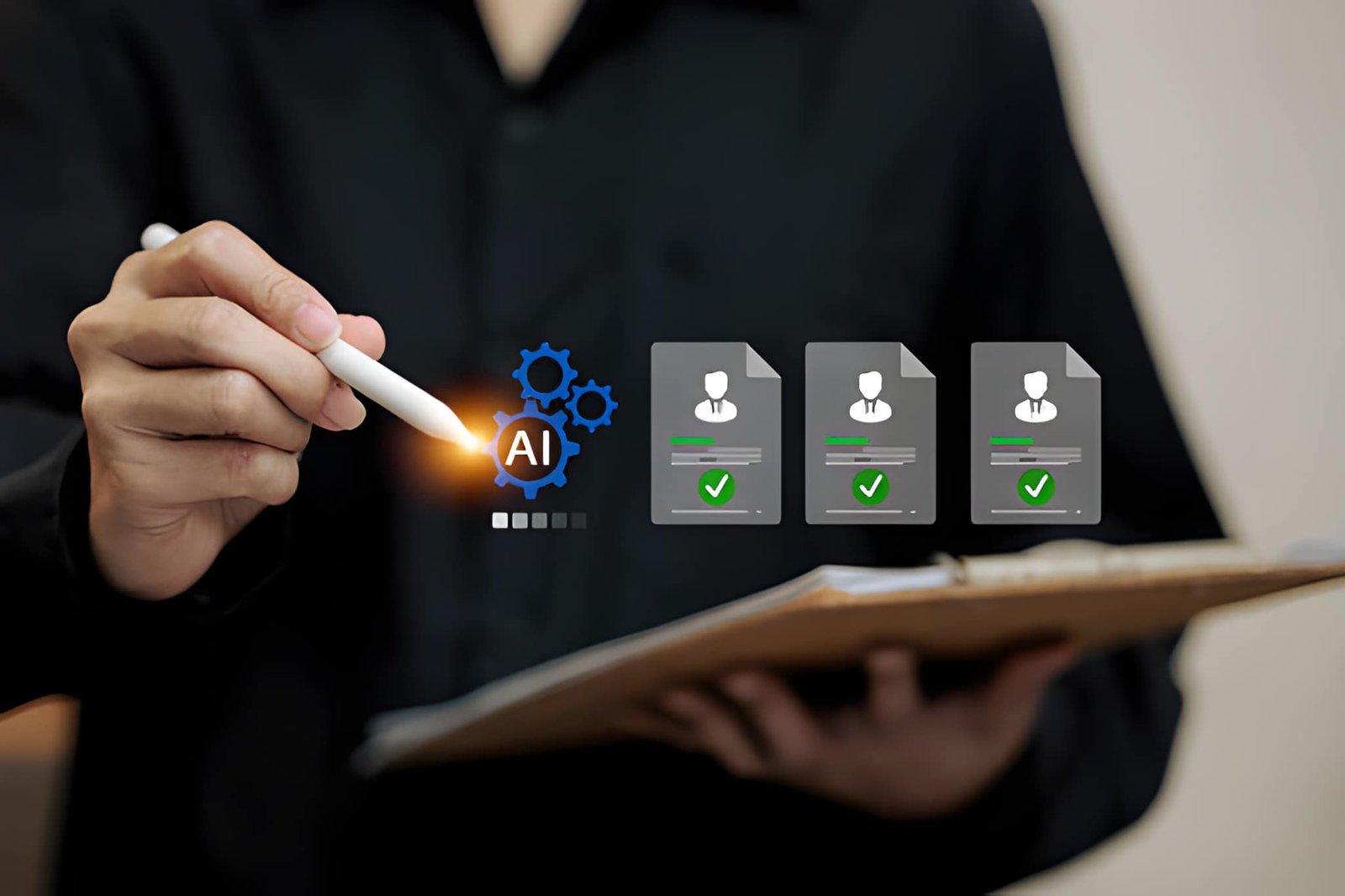
AI in Recruitment has moved well beyond resume screening. Today’s recruitment automation tools can generate job descriptions, identify candidates with relevant skill sets, rank applicants, schedule interviews, and communicate with candidates through intelligent chatbots all before a human recruiter enters the conversation. Nearly 60% of HR leaders report that AI-powered recruitment has improved talent acquisition by reducing bias and accelerating hiring timelines.
Employee Performance Evaluation has also evolved. Rather than relying on periodic reviews or information gathered only in the weeks before an appraisal, AI-based performance management systems collect performance signals continuously throughout the year. This real-time approach reduces recency bias, provides more complete assessments, and gives employees consistent feedback that supports growth between formal review cycles.
Employee Talent Management is another area seeing significant AI impact. Platforms now enable the precise mapping of employee skills, identify gaps before they become business problems, and generate personalized development paths that align individual growth with organizational needs. This has a direct effect on employee retention strategies when people see a clear path forward, they are far less likely to look for it elsewhere.
Beyond people-facing functions, AI is also streamlining payroll processing, compliance tracking, financial reporting, and workforce analytics freeing HR professionals from administrative work that once consumed the majority of their time.
The Three Skills Priorities Every CHRO Must Balance
The real strategic challenge for CHROs isn’t deciding whether to adopt AI that question has largely been answered. The harder work is managing three distinct but interconnected skill priorities simultaneously.
Skills to Add: AI Literacy and Responsible Governance
As AI becomes embedded in HR workflows, a new set of competencies has become non-negotiable. These include AI literacy, responsible AI governance, intelligent workflow design, and the ability to mediate between human judgment and algorithmic output.
What makes these skills particularly challenging is their pace of evolution. Because AI technologies change quickly, the competencies required to use and govern them change just as fast. CHROs cannot apply a single upskilling model across the entire HR function. The approach must be intentional customized by role, organizational maturity, and strategic priorities.
Not every HR professional need deep technical knowledge. What every HR professional does need is enough understanding to ask the right questions, recognize when AI recommendations require human review, and use these tools in ways that reflect the organization’s values.
Skills to Elevate: Strategic Capabilities That AI Amplifies
Alongside emerging AI-specific skills, a set of established competencies has grown far more important in an AI-infused HR operating model. These include:
- Data engineering the ability to work with workforce data meaningfully, not just interpret dashboards
- Enterprise project management as AI transformation requires coordinated cross-functional execution
- Strategic consulting helping business leaders understand what AI can and cannot solve for them
- Change leadership guiding teams and individuals through the psychological and practical realities of AI adoption
These capabilities matter because AI doesn’t reduce HR’s strategic influence it amplifies it. HR now has access to richer data, faster insights, and greater automation capacity than ever before. But translating those inputs into business outcomes still requires human judgment, organizational awareness, and the kind of leadership that no algorithm can replicate.
Skills to Protect: The Human Core That Holds Everything Together
This is where many CHROs face their greatest blind spot. In the urgency to build AI literacy and technical fluency, there is a real and documented risk that fundamental human capabilities begin to erode quietly, incrementally, and in ways that are very difficult to reverse.
The core human skills HR cannot afford to lose include:
- Critical thinking the ability to evaluate AI outputs, challenge assumptions, and make sound decisions when data is incomplete
- Emotional intelligence essential for navigating sensitive conversations, resolving conflict, and building trust at every level
- Creativity the capacity to design solutions, cultures, and experiences that no model can generate from historical data alone
- Data judgment understanding not just what the numbers say, but what they mean and where they fall short
- Business acumen keeping HR strategy tethered to commercial reality and organizational purpose
- Relationship management the human skill that sits at the foundation of every great culture, every retention outcome, and every meaningful employee experience
As Gartner’s research makes clear, if CHROs focus disproportionately on technical upskilling, these fundamental skills may erode and once weakened, they are far harder to rebuild. The risk is subtle. It doesn’t announce itself. It shows up slowly in decisions that lack nuance, in employee engagements that feel transactional, and in HR functions that are technically capable but organizationally disconnected.
Reinventing HR From the Inside Out
Managing the skills equation is only one dimension of the CHRO’s transformation mandate. The other is reimagining how the HR function itself operates and what it is capable of delivering.
AI-powered tools are making it possible for HR teams to personalize employee onboarding experiences at a scale that was previously impossible. New hires can receive tailored induction materials, automated document workflows, and ongoing support through intelligent assistants without overburdening HR coordinators with repetitive administrative tasks.
Employee training programs are becoming adaptive. Rather than delivering the same curriculum to every employee, AI-enabled learning platforms assess individual skill levels, identify gaps, and recommend learning pathways that match both personal career goals and organizational needs. This kind of personalization has a measurable effect on engagement employees who feel that their development is taken seriously are significantly more likely to stay, contribute, and grow within the organization.
Employee feedback mechanisms have also been transformed. Continuous listening tools, sentiment analysis, and engagement surveys powered by AI allow HR teams to identify warning signs burnout, disengagement, retention risk before they become critical. Organizations that act on this kind of intelligence early are building the proactive HR capability that reactive models simply cannot match.
Employee KPI tracking has shifted from annual snapshots to ongoing visibility. Managers now have access to real-time data that supports coaching conversations, performance planning, and development interventions throughout the year not just at review time.
Workforce Planning in an AI-Driven Era
One of the most significant shifts AI brings to HR is in the domain of workforce planning. Traditional planning models were largely backward-looking analyzing historical data to project future needs. AI-infused workforce planning is forward-looking, dynamic, and scenario-based.
CHROs now have the tools to map current skills across the organization, model how those skills align with future business strategy, and identify where gaps will emerge before they become operational problems. Employee upskilling and employee reskilling programs can be prioritized not based on assumption but on data targeting the capabilities the business will need most as AI continues to reshape roles and responsibilities.
Organizations that invest meaningfully in upskilling and reskilling are significantly more likely to achieve positive business outcomes from AI. The research is consistent: the companies winning the AI era are not necessarily those with the most advanced technology. They are the ones who have built the human capacity to use that technology well.
This also means rethinking resourcing models. Blending full-time employees, contractors, gig workers, and AI-augmented teams into a cohesive, agile workforce is increasingly part of the strategic CHRO’s toolkit especially as demand for specialized skills fluctuates and the pace of change makes rigid structures less viable.
The Balance That Defines Effective CHRO Leadership
There is a version of AI transformation in HR that looks impressive on paper tools implemented, processes automated, dashboards built but fails to deliver lasting value because the human infrastructure wasn’t maintained alongside the technical one. Employee engagement drops. Trust erodes. HR becomes efficient but not effective.
The CHROs who lead well through this era will be those who hold two things in balance: the discipline to build AI capability with genuine intentionality, and the wisdom to protect the human skills, relationships, and judgment that give that capability its meaning. AI should augment what HR does best not replace it. The goal is not a more automated HR function. The goal is a more capable one.
How the Right Platform Supports This Balance
Managing this transformation well requires infrastructure that supports both sides of the equation the intelligent automation that reduces administrative burden and the people-first design that keeps HR human. FlowHCM is built with this balance in mind. As a cloud-based Human Capital Management platform, it integrates AI and automation across core HR workflows from employee onboarding and payroll to employee performance tracking, HR analytics, and workforce planning giving HR teams the operational efficiency to focus their energy where it matters most.
For CHROs navigating the demands of AI transformation, having a platform that handles the complexity of day-to-day HR operations means more time for the strategic, relational, and judgment-driven work that no technology can replace. FlowHCM doesn’t replace the human side of HR it creates the space for it to thrive.