




HR departments for decades ran their operations on Excel sheets and paper-based processes. A single spreadsheet managed employee attendance and leave, another handled payroll, and candidate CVs piled up on desks with shortlisting notes scribbled on the back of papers. Employees walked into HR offices carrying expense receipts for reimbursements, and every new hire sat down with a lengthy paper form and a folder full of documents just to complete their onboarding. For remote or hybrid employees, this process became even more chaotic.
These manual processes may sound manageable in theory, but HR managers know the reality all too well. A single error in an attendance record or a delayed payroll run does not stay isolated. It triggers a domino effect, eroding employee trust, damaging morale, and quietly pulling productivity down across the organization.
The need for HR software did not emerge from convenience. It emerged from necessity. Organizations focused on long-term growth have already made the shift to automated HR systems, and in 2026, more businesses are recognizing what early adopters understood years ago: HR software is no longer a luxury reserved for large enterprises. It is the operational backbone that growing businesses, whether startups, mid-sized companies, or large organizations, simply cannot afford to ignore. The real question is no longer whether to implement one, but which features matter most and what fits best for your organization.
Where Most HR Teams Are Still Struggling
Despite the availability of modern tools, a surprising number of HR departments still operate on fragmented systems. One platform handles payroll, another tracks attendance, a third manages recruitment and none of them talk to each other. The result is wasted hours, data inconsistencies, and decisions made on incomplete information.
Some of the most common pain points include:
- Manual attendance tracking that leads to payroll errors and employee disputes
- Recruitment processes with no structured pipeline, causing good candidates to slip through
- Performance reviews that happen once a year on paper, with no ongoing tracking
- No centralized employee data, making audits and compliance checks a nightmare
- HR teams spending more time on administrative tasks than on people strategy
These are not small inefficiencies. Over time, they compound into higher turnover, compliance risks, and a workforce that feels unsupported.
What the Right HR Management Software Actually Does
A centralized HR management software does not just digitize existing processes it restructures them. It connects every function of HR into a single, intelligent HR system where data flows automatically, approvals happen in real time, and both employees and managers have visibility into what they need.
The right HR management system software eliminates the gap between what HR knows and what the business needs. It turns raw workforce data into actionable insights. It reduces the dependency on manual follow-ups and gives HR professionals the time to focus on what actually moves the needle culture, retention, and talent development.
The shift from reactive HR to proactive HR is entirely possible, but only when the software infrastructure supports it.
Core Features Every HR Management System Software Must Have in 2026
Not all HR platforms are built equally. When evaluating your options, certain features are no longer optional they are baseline expectations for any serious HR management software in 2026.
- Employee self-service portal employees should be able to view pay slips, apply for leave, and update their information without raising a ticket
- Automated workflows and approvals from onboarding checklists to expense claims, automation reduces delays and human error
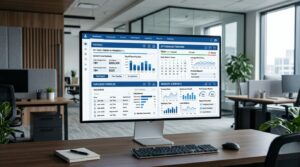
- Real-time HR analytics and dashboards decision-makers need live data, not last month’s report
- Role-based access control sensitive employee data must be visible only to those who need it
- Mobile accessibility a platform that only works on a desktop is already behind
- Scalability the system must grow with your headcount without requiring a full migration
These features form the foundation. Everything else builds on top of them.
Payroll, Attendance, and Compliance: The Non-Negotiables
If there is one area where errors are completely unacceptable, it is payroll. Employees trust organizations to pay them accurately and on time and a broken HR payroll software experience damages that trust fast.
A reliable payroll management system should handle multi-location salary structures, tax calculations, statutory deductions, and pay slips generation without manual intervention. It should sync directly with attendance data so that late arrivals, overtime, and absences are automatically reflected in salary calculations.
Time and attendance tracking software has evolved significantly. Modern cloud-based time and attendance software integrates with biometric devices, mobile apps, and geofencing technology making it possible to track attendance accurately whether your team is in the office, working remotely, or spread across multiple branches. Payroll time and attendance software that works as a unified system removes the single biggest source of payroll disputes in most organizations.
Compliance is equally critical. Tax regulations, labor laws, and statutory requirements vary by region and change frequently. Your HR software must be updated to reflect local regulations automatically not something you patch manually every quarter.
Recruitment and Onboarding Capabilities That Save Time
Hiring the right person is already difficult. A slow, unstructured recruitment process makes it harder. An ATS (applicant tracking system) brings order to the entire hiring pipeline from job posting to candidate shortlisting to interview scheduling in one place.
AI in recruitment is no longer experimental. AI recruitment tools can screen resumes, rank candidates by relevance, and even flag potential red flags before a human reviewer ever opens a profile. Recruitment automation software reduces the time-to-hire significantly and ensures no qualified candidate is lost in an unmanaged inbox.
Once the right person is hired, employee onboarding becomes the next critical touchpoint. A structured digital onboarding experience with automated document collection, policy acknowledgments, and role-specific checklists sets the tone for everything that follows. Organizations with strong onboarding processes see measurably higher retention in the first year.
Performance, Training, and Engagement Under One Roof
Employee performance evaluation works best when it is continuous, not annual. Employee performance tracking throughout the year through structured check-ins, goal updates, and real-time feedback gives managers and employees a shared understanding of expectations and progress.
Employee KPI tracking allows organizations to align individual contributions with broader business goals. When employees can see how their work connects to company outcomes, engagement follows naturally.
Employee training programs built into the HR management system ensure that skill development is not a separate, disconnected initiative. Training records, completion tracking, and certifications all sit within the same platform. Employee performance review cycles become more meaningful when they are backed by a full year of documented progress rather than a single conversation.
Employee engagement software and employee engagement programs integrated within HR platforms help organizations measure sentiment, run pulse surveys, and act on feedback before disengagement becomes resignation.
System Requirements to Check Before You Commit
Features matter, but so does how the software is built. Before finalizing any HR software, evaluate these technical requirements carefully.
- Cloud infrastructure ensure the platform offers reliable uptime, data backups, and disaster recovery
- Integration capability the system must connect with your existing ERP, accounting, or communication tools
- Data security and access control look for encryption standards, audit logs, and GDPR or local compliance certifications
- Implementation support a feature-rich platform with poor onboarding support will slow your team down significantly
- Customization flexibility every organization has unique workflows; the software should adapt to you, not the other way around
Remote team management has also become a core requirement. Any platform shortlisted in 2026 must support remote team performance monitoring, distributed payroll, and cross-location reporting as standard not as premium add-ons.
The Real Cost of Choosing the Wrong HR Software
An inefficient HR software decision does not just create inconvenience it creates measurable business damage. Payroll errors lead to legal exposure. Disconnected recruitment tools slow down hiring during critical growth phases. Lack of employee performance tracking results in talent going unrecognized and eventually leaving.
The cost of switching platforms mid-growth is also significant in time, data migration effort, and team retraining. This is why the evaluation stage matters more than most organizations realize.
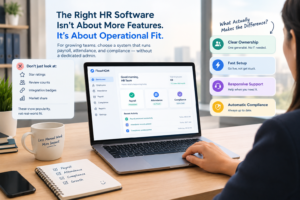
When evaluating HR software, organizations are increasingly drawn to FlowHCM because it covers the full spectrum of HR operations under one centralized system. Rather than implementing multiple tools for different functions, FlowHCM brings everything together in a single, unified platform.
From candidate recruitment all the way through to employee separation, every process is connected, secured, and fully accountable. This end-to-end coverage means HR teams spend less time switching between systems and more time focusing on what actually matters: their people.
For organizations serious about building an HR infrastructure that scales with their growth, the decision they make today will shape how efficiently they operate well into the future. FlowHCM is built for exactly that purpose.