

Employee requests get lost between HR and line managers because nobody owns each approval step. Strong employee management fixes this by assigning one owner, one deadline, and one shared workflow to every request. An employee management system adds reminders and live status, so approvals move faster, and employees stay informed.
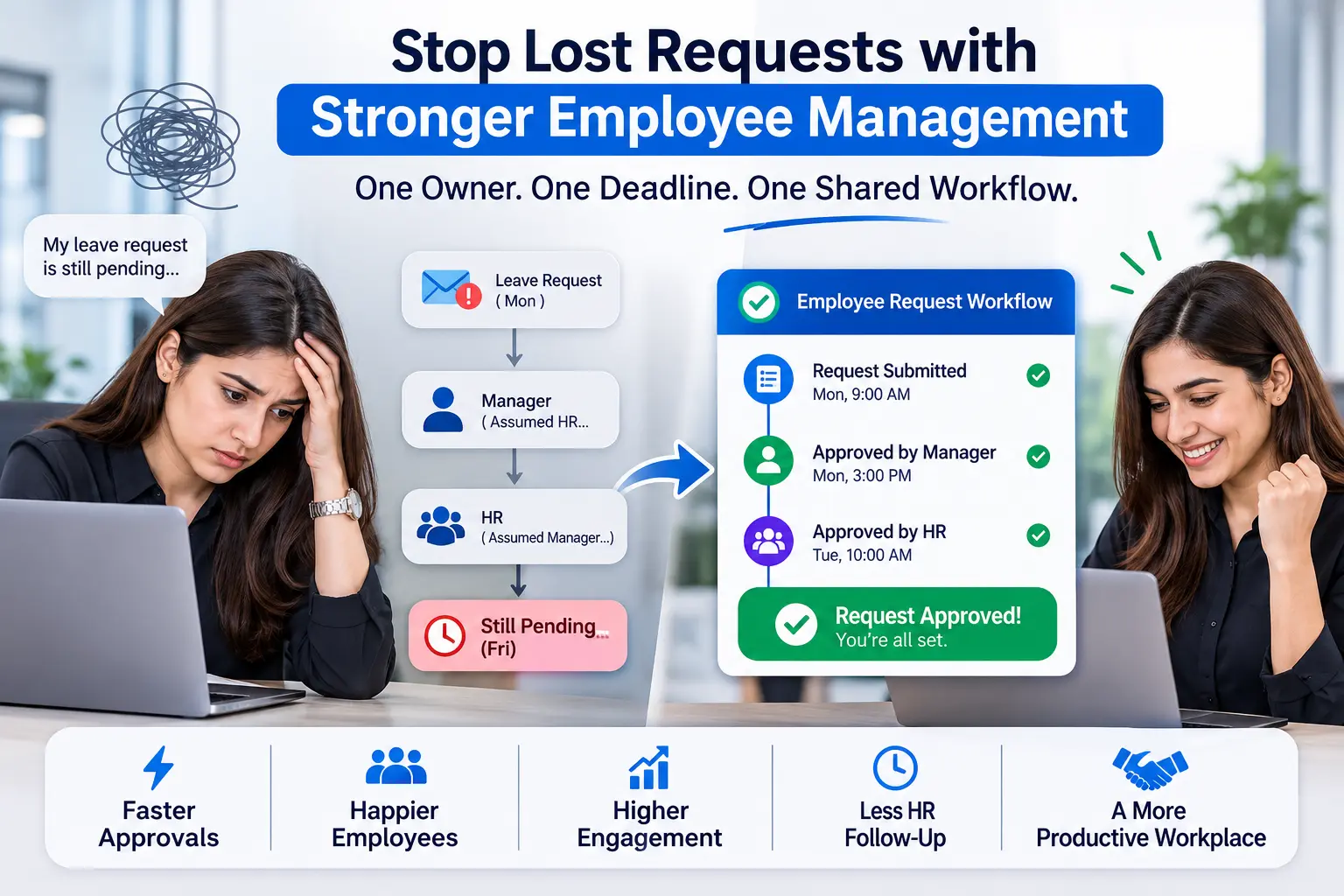
An employee submits a leave request on Monday. By Friday, nobody has replied. The manager assumed HR would handle it. HR assumed the manager would approve it first. Meanwhile, the employee waits, plans get delayed, and trust slowly drops. Small delays like this add up fast. It only takes one missed handoff.
This is the hidden cost of weak employee management. Requests rarely disappear in one dramatic moment. They slip through small gaps between inboxes, approvals, and unclear roles. In this guide, you will learn where those gaps appear, why they hurt your business, and how HR teams can close them with simple, steady habits. Fixing them does not require a large restructure.
Why Weak Employee Management Stalls Requests at the Handoff
Requests stall at the handoff because nobody owns the next step. When approval moves from a manager to HR, each side assumes the other is acting.
Delays usually start in four places:
- Email threads that bury the request
- Managers who approve verbally but never record it
- HR teams waiting on details they never ask for
- Approval chains with no deadline or backup
Most managers are busy, not careless. Each gap looks small. Together, they weaken employee management across the company.
Why Remote Teams Feel Delays Most
Remote teams feel delays most because employees cannot walk over and ask for an update. Strong remote employee management depends on requests that everyone can see. Without that, silence feels like rejection.
Managers in different time zones also miss approval alerts. A request raised Tuesday can wait until Thursday unnoticed. HR then hears about the delay only when the employee complains.
What Slow Requests Cost Your Business
Slow requests cost you engagement, time, and credibility. An ignored training request tells employees their development doesn’t matter. Repeated silence also weakens sound employee engagement strategies.
HR leaders often hear the pattern in exit interviews. People rarely say a form was late. They say they felt ignored.
Follow-up chasing also drains HR time, which poor employee management creates and a clear process removes.
A Simple Fix: One Owner, One Deadline, One Place
Close the gap by giving every request one owner, one deadline, and one home. Better employee management begins there.
Start with these steps:
- Map each request type, from submission to final approval
- Set a 48-hour response time for every approval step
- Name a backup approver for every manager
- Review pending items in a weekly ten-minute check
Shared inboxes cannot enforce these rules. Software for employee management can. A cloud-based employee management system like FlowHCM routes each request to the right approver, sends reminders, and shows HR what is pending. Managers can then approve leave and attendance exceptions faster, because everything sits in one view.
How Faster Approvals Lift Engagement
Faster approvals lift engagement because employees see that someone answers them. It is the simplest upgrade to employee management you can make. Your employee engagement programs also work better when everyday service runs smoothly.
Request data improves employee development too. If training requests wait the longest, you know where managers need support. Reliable employee management software makes that data easy to find so that HR can advise leaders with facts. Managers also gain clarity on what needs their attention each day.
Signs Your Request Process Is Improving
You can tell the fix is working when response times fall, and follow-up emails stop. Track a few simple numbers each month, and share them with line managers.
Watch these signals:
- Average time from request to final approval
- Share of requests answered within 48 hours
- Number of requests that needed a reminder
- Employee feedback on how easy requests feel
Numbers like these show whether your employee engagement programs reach people in daily work. They also help you adjust employee engagement strategies with real evidence, not guesses.
Better Employee Management Starts With One Clear Owner
Lost requests are a process problem, not a people problem. Strong employee management gives every request an owner, a deadline, and a visible status. This week, map your top three request types and see where they stall.