


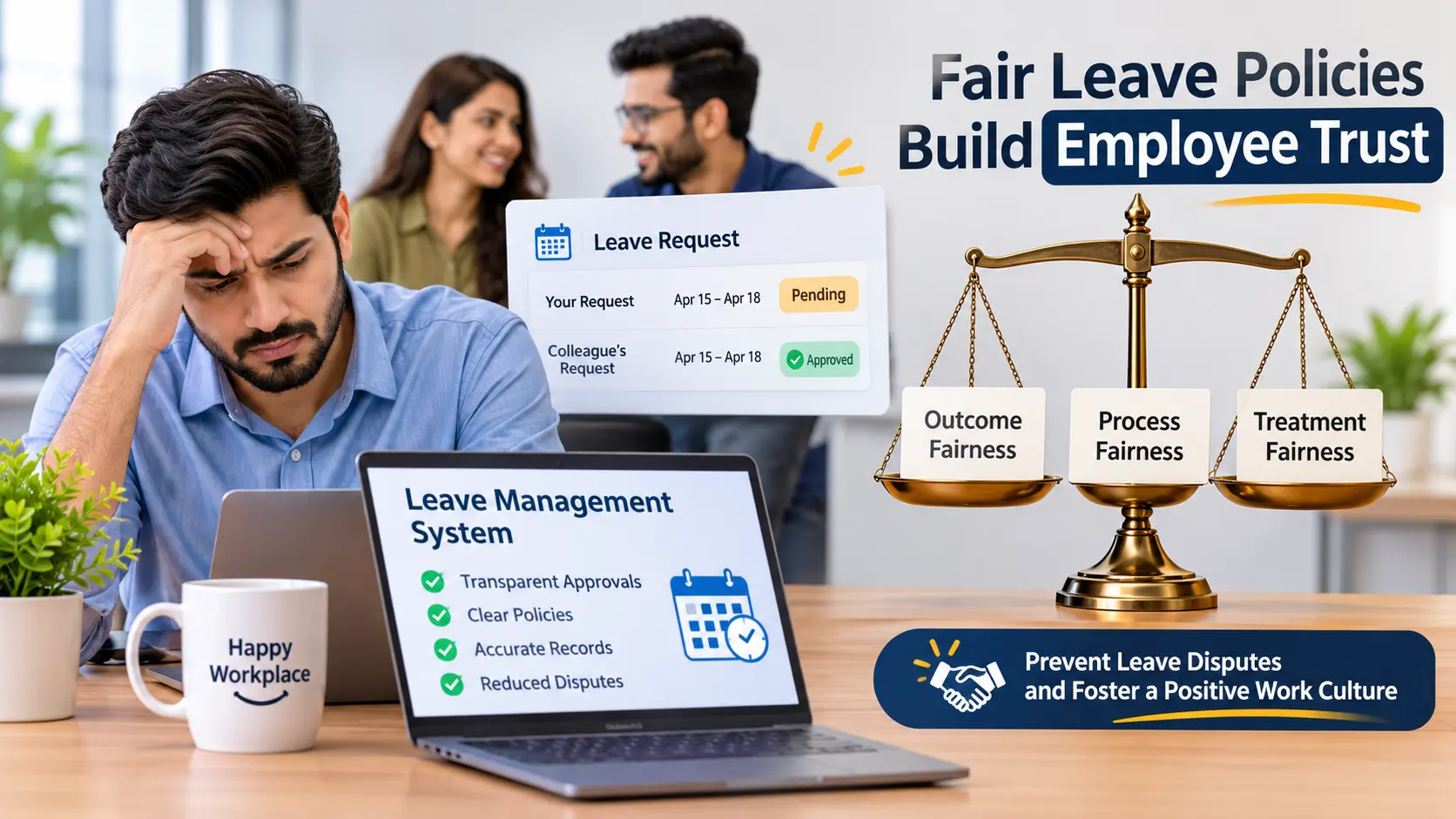
A leave management system protects workplace trust by making leave decisions transparent, consistent, and documented. Rooted in organizational justice theory, it supports fair outcomes, clear processes, and respectful communication. Employees see their balances, approval status, and policy rules in one place. Managers apply the same rules to everyone. HR leaders gain a reliable record when disputes arise. The result is fewer arguments, faster approvals, and stronger trust between staff and management.
A leave request sits unanswered for a week. A colleague’s request for the same dates is approved in a day. No one complains out loud, but everyone notices. Trust begins to crack at that moment.
Leave disputes rarely start as big fights. They grow from small moments that feel unfair, and HR often hears about them too late. A leave management system helps HR teams remove those moments before they turn into resentment.
Organizational justice theory explains why this matters. It says employees judge fairness in three ways: the outcome they receive, the process behind it, and the respect they are shown. When leave fails on any one of these, trust drops. This blog explains where leave disputes begin and how HR leaders can fix them with clear rules and the right tools.
What Organizational Justice Theory Reveals About Leave Decisions
Organizational justice theory says employees judge fairness through outcomes, process, and treatment. Leave requests test all three every day.
Research by scholars such as Jerald Greenberg and Jason Colquitt links fairness perceptions to job satisfaction, commitment, and intent to stay. In plain terms, people stay where they feel treated fairly.
- Outcome fairness: Do similar requests get similar answers?
- Process fairness: Are the rules clear and applied the same way?
- Treatment fairness: Does the manager explain decisions with respect?
The Hidden Cracks Behind Leave Disputes
Most leave disputes start with inconsistent approvals and unreliable records. When employees cannot verify a balance or a decision, they assume the worst.
HR managers often describe the same patterns:
- Requests sent through chat, email, and paper forms
- Balances that differ between employee and HR records
- Approvals that depend on which manager is asked
- No written reason when a request is declined
Each gap weakens process fairness. Over time, employees stop asking and start comparing. A leave management system with clear rules can close most of these gaps.
How a Leave Management System Restores Fairness
A leave management system restores fairness by applying the same rules to every request and keeping a visible record of each decision.
An employee leave management system puts balances, policies, and approval status in one place. Employees see where their request stands. Managers see team coverage before they decide, so they approve faster and with more confidence. HR can also spot patterns, such as one team with unusually high rejections.
It protects outcome fairness too. Rules for carry-forward days, public holidays, and leave types apply the same way to everyone. Records also connect with attendance tracking, so days taken always match days recorded.
FlowHCM supports this approach with configurable policies, approval workflows, and audit trails. When someone asks, “Why was my request declined?” HR has a clear answer.
What to Look for in Leave Management Software
Choose leave management software that employees can understand without training. Strong employee leave management depends on simple steps that people actually use.
- Clear approval timelines with automatic reminders
- Mobile access for staff and managers
- A required reason when a request is declined
- Reports that show approval patterns by team
These features support treatment fairness because every decision arrives with an explanation.
Four Steps HR Leaders Can Take This Quarter
Fix the process first, then choose the tool. A leave management system cannot repair an unclear policy.
- Review the last six months of leave complaints and find the common cause.
- Publish one written leave policy in plain language.
- Set a fixed response time for every request.
- Train managers to explain declines respectfully.
Next, link leave data with payroll so deductions and balances never disagree. An employee leave management system then keeps these rules consistent as your team grows.
FAQs
What is a leave management system?
A leave management system is a platform that records, routes, and tracks leave requests, balances, and approvals. It replaces scattered emails and spreadsheets with one reliable record.
How does employee leave management affect trust?
Fair employee leave management shows staff that rules apply equally. Clear balances and written decisions reduce arguments and build confidence in HR.
Trust Grows When Every Leave Decision Feels Fair
Leave disputes are rarely about days off. They are about fairness. A leave management system gives HR leaders the consistency, records, and transparency that organizational justice theory says employees expect. Start with one clear policy, then let the system apply it evenly.