




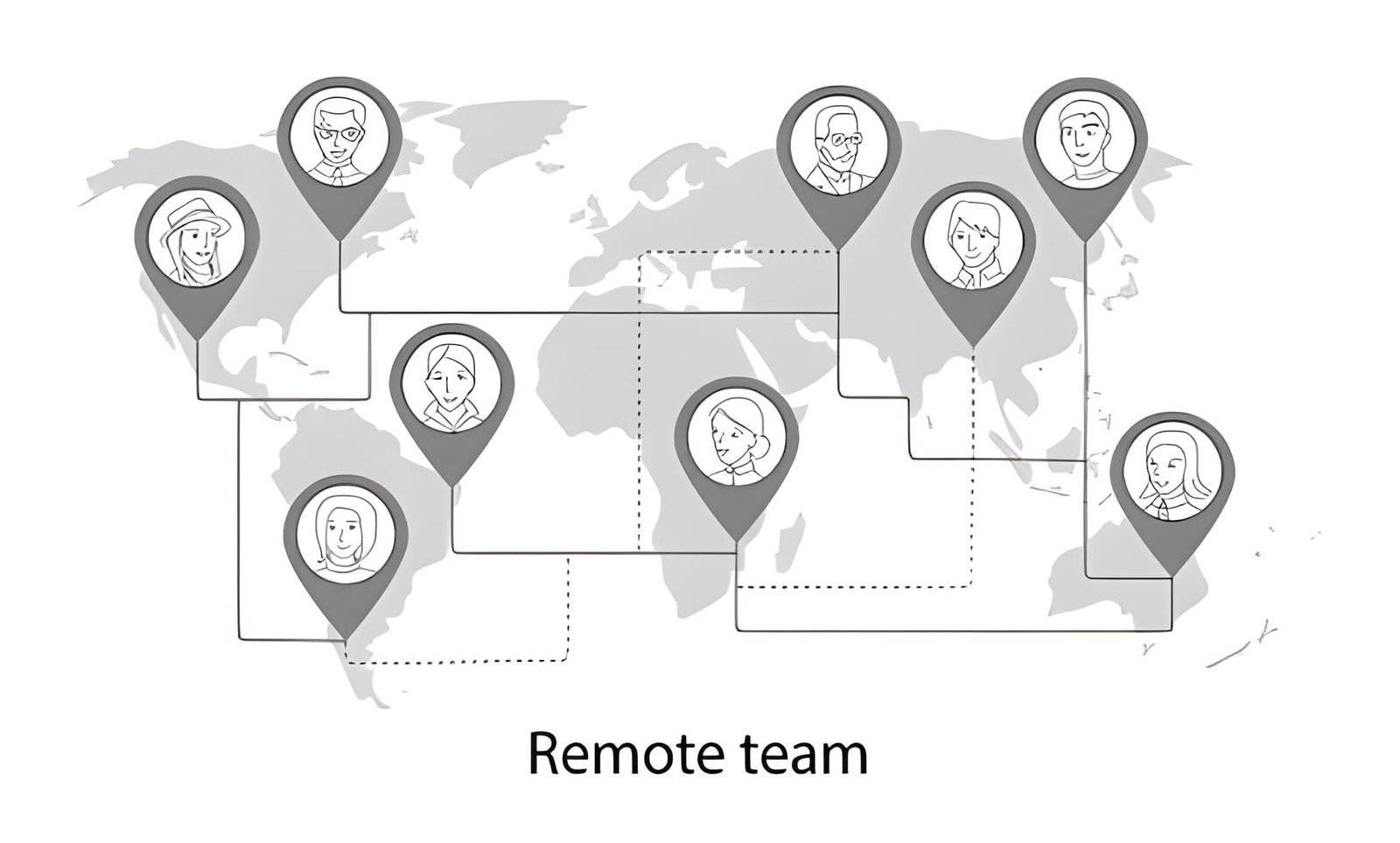
What makes a dream team?
A quietly powerful one where people collaborate, discuss, plan, and execute efficiently. Where they respect each other’s decisions, share something deeper than work conversations, and show up not just to contribute to a task but also for one another as people.
Now the real question: can you build a team like this without a physical office? For most, the honest answer is no.
This is the core challenge remote teams face every single day. Managers struggle to understand why their remote teams don’t connect the way their on-site teams do, why misalignment keeps creeping in. But the reason isn’t simply that work is virtual. There are deeper forces at play, and understanding the psychology of remote teams is no longer optional. It is foundational.
Why Trust Is the Engine of Remote Team Management
Trust in a remote setting goes far beyond believing your colleagues will meet a deadline. At its core, it is the shared confidence that team members are competent in their roles, honest in their communication, and genuinely invested in each other’s success. Research consistently identifies three pillars that define how trustworthy any individual is perceived to be: ability (the skills and knowledge they bring), benevolence (acting in the interest of the team, not just themselves), and integrity (standing by values the group respects).
When these three qualities are present, remote team management shifts from a task of monitoring to one of enabling. Teams with high trust communicate openly, take initiative without waiting for approval, and recover from setbacks without blame cycles. When trust is absent, even technically skilled teams underperform hiding mistakes, avoiding difficult conversations, and doing just enough to get by.
The Invisible Barriers That Damage Remote Team Trust
Remote work removes many of the natural trust-building moments that happen in physical spaces. No shared lunches, no reading body language across a table, no organic interactions after a meeting end. What fills that gap or fails to determines the health of the team.
Some of the most common trust-breaking patterns in remote environments include:
- Inconsistency between what leaders say and what they do when promises made in team calls go unacknowledged, people stop believing in leadership commitment.
- Micromanagement that signals a lack of confidence in the team’s judgment, which chips away at autonomy and morale.
- Going “off grid” team members who are repeatedly unreachable create uncertainty that erodes collaborative momentum, even when their work quality is otherwise strong.
- Punishing transparency when someone raises a concern or admits a mistake and is met with blame, the entire team learns that silence is safer than honesty.
Each of these patterns raises cortisol the stress hormone across the team. And high-cortisol environments do not produce collaboration; they produce self-protection.
How Trust Actually Gets Built: The Science Behind It
Trust is not a static quality it emerges over time through repeated interactions where expectations are consistently met. In remote team building, this means creating deliberate structures that replicate what physical proximity naturally provides.
One key insight from research is the concept of swift trust the ability for teams, especially those assembled quickly or for short-term projects, to establish functional trust early by leaning on shared professional norms and clear role definitions. In remote settings, this kind of trust becomes even more essential when teams span different time zones and may rarely, if ever, meet in person.
What accelerates trust in remote team building activities and day-to-day operations:
- Availability being socially present for teammates, responding within reasonable timeframes, and not disappearing without context. Research identifies this as the single most critical factor unique to virtual team trust.
- Transparency in responsibilities knowing clearly who owns what removes ambiguity and builds confidence in the team’s structure.
- Emotional care checking in on teammates beyond task updates, listening actively, and acknowledging what others are going through.
- Consistent ethical standards team members who visibly live by shared values earn trust that goes beyond their technical contributions.
Managing Remote Teams With a Trust-First Approach
Managing remote teams effectively starts with leaders modeling the behaviors they want to see. A leader who narrates their decision-making explaining not just what was decided but why reduces the uncertainty that breeds suspicion in distributed teams. A leader who admits mistakes openly signals that the team is a safe place to be human.
Psychological safety, the belief that it is safe to speak up without fear of embarrassment or punishment, is the most consistent predictor of high-performing teams. Leaders who create micro-moments of safety specific praise, calm responses to conflict, open invitations for feedback build the kind of environment where remote team engagement becomes organic rather than forced.
Structurally, a few practices make a measurable difference:
- Regular check-ins that are human first and task second giving space for people to share before diving into deliverables.
- Clear Employee KPI Tracking systems that make performance visible and fair, removing the anxiety of feeling unseen or unfairly judged.
- Rotating meeting times and equalizing access to leadership for team members across different time zones.
- Virtual rituals informal coffee chats, interest channels, or team-building moments that nurture connection outside of work tasks.
Trust and Its Direct Impact on Remote Team Performance
The relationship between trust and remote team performance is not theoretical it is measurable. Teams that operate in high-trust environments show stronger task completion rates, higher voluntary engagement, lower turnover, and greater willingness to innovate. When people trust each other, they share information freely, ask for help without hesitation, and allow others to lead when the situation calls for domain expertise.
Conversely, distrust is expensive. It slows decision-making, suppresses new ideas, and creates quiet disengagement that is hard to detect until key people have already mentally checked out. Remote employee training and development also suffers in low-trust environments people do not invest in growth when they do not feel psychologically safe or valued.
Onboarding as a Trust-Building Opportunity
Trust does not begin on day sixty of employment it begins the moment someone joins the team. A structured remote employee onboarding checklist is not just about logistics; it is a signal of how seriously the organization takes the individual. When onboarding is thoughtful covering role clarity, team introductions, communication norms, and early check-ins new team members form a baseline of trust much faster.
Employee talent management practices that invest in clear onboarding also reduce the ambiguity that new remote employees often feel. When someone knows what is expected of them, who to turn to, and how success is measured, they can focus on contributing rather than navigating uncertainty. Employee training programs that continue beyond onboarding reinforce the message that the organization is committed to long-term development, which deepens trust over time.
The Role of Tools and Systems in Sustaining Trust
Even the strongest team culture needs the right infrastructure. Collaboration tools for remote teams whether for project tracking, async communication, or performance visibility do not build trust on their own, but they create the conditions where trust can be maintained. Transparency in workflows, clear documentation, and accessible information reduce the friction that can quietly erode team cohesion.
FlowHCM, as a Human Capital Management platform, supports this infrastructure across several touchpoints. Features like structured remote employee onboarding, performance management with clear Employee KPI Tracking, and employee training programs help organizations create the kind of operational clarity that trust depends on. When team members know their responsibilities are visible, their development is supported, and their performance is evaluated fairly, the foundation for genuine collaboration becomes much stronger. In remote work management, the systems an organization chooses reflect the values it holds and FlowHCM is built around the idea that people perform best when structure and trust work together.