




Scheduled reports management is an automated system that delivers key workforce and business reports to leadership on a set schedule. By removing manual spreadsheet work, it makes sure executives get accurate, up-to-date information exactly when they need it. This simple automation stops costly decision delays, protects your budget, and helps you make smart workforce plans based on what is happening right now.
How much money does your company lose when leaders make big headcount choices using last month’s numbers?
Consider your executive team looking at staffing costs on a Monday morning. They see a big rise in overtime pay across regional offices. Based on the old report in front of them, they pause hiring and cut extra shifts right away. But here is the problem: the labor shortage was actually fixed two weeks ago. The report they read took three full weeks to gather, clean up, and send. Because they acted on old information, leadership caused unnecessary work slowdowns and delayed critical hiring.
This time lag between field activity and executive review creates hidden operational costs. When your teams collect data manually, reporting becomes a slow, backward-looking task. You end up driving your business by looking in the rearview mirror. Setting up crucial reports on schedule that impacts the leader’s decision changes this completely by sending automatic, up-to-date reports straight to decision-makers. Moving from manual spreadsheets to simple automation saves money, speeds up your choices, and keeps your executive decisions aligned with real business needs.
Reporting Delays Weaken Your Executive Strategy
Reporting delays compromise your leadership decisions because you end up fixing past problems instead of addressing today’s actual needs. When data takes weeks to travel from local HR teams to leadership screens, team numbers and business conditions change. Making choices on old numbers leads to wasted budgets, delayed hiring, and extra costs.
Delayed information creates compounding risks for your business:
- Wasted Budgets: Spending money based on old numbers sends cash to solved issues while leaving real gaps without funding.
- Wrong Staffing Levels: Outdated headcount reports make leaders hire in calm departments while high-growth teams stay understaffed.
- Lost Trust: Constant gaps between official reports and daily reality weaken trust between department heads and top executives.
- Slow Reaction Times: Long decision times stop you from moving workers quickly when market needs shift.
Simple Basics of Automated Reports
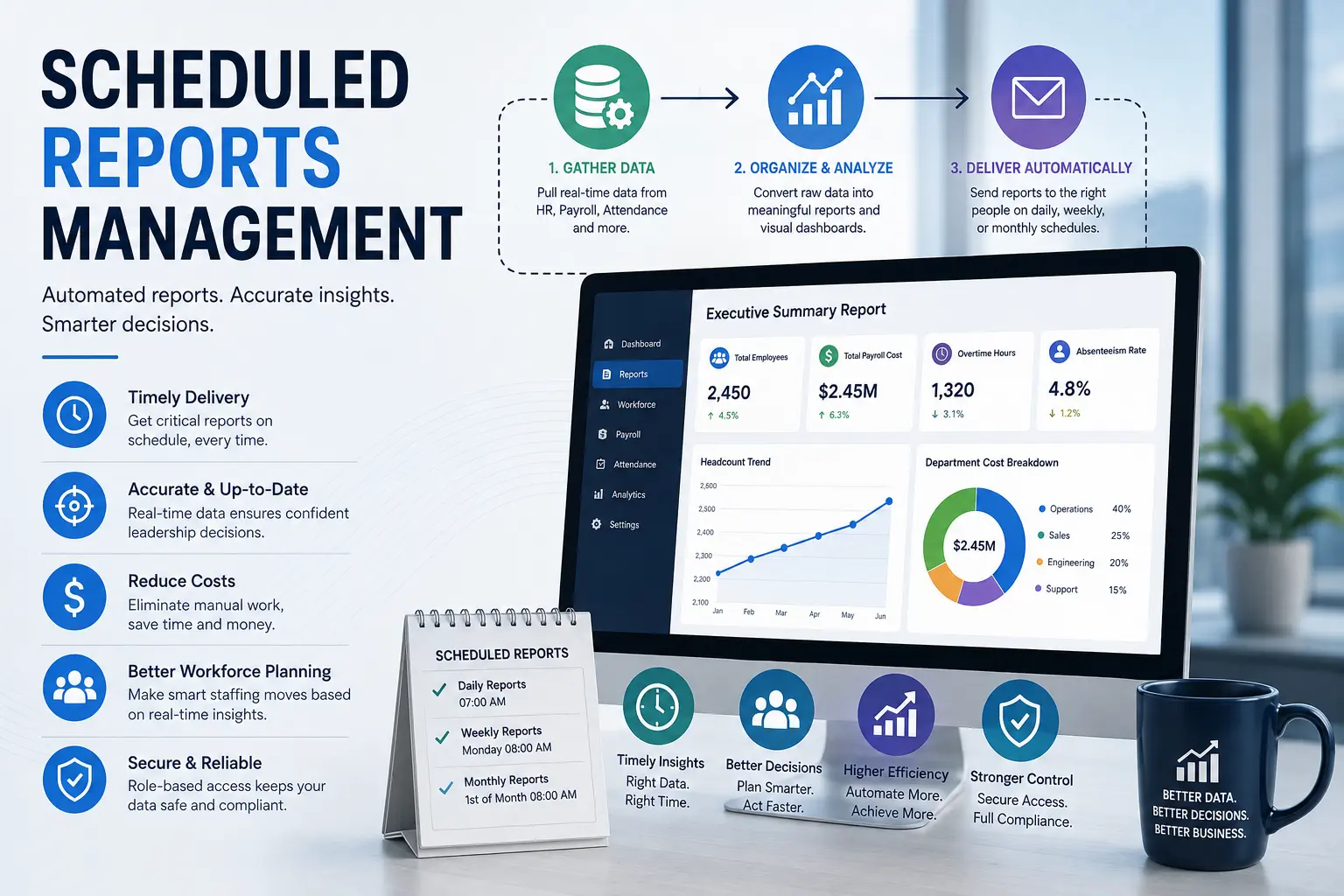
Scheduled reports acts as an automatic delivery system that collects, organizes, and sends key numbers to specific people at set times. Instead of asking your HR team to gather spreadsheets manually every month, automated tools pull daily numbers instantly. This ensures you get verified information right when you need to make important choices.
A modern automated reporting system works through three easy steps:
- Gathering Data: The system pulls raw attendance, hours, and payroll records directly from your central system without extra manual effort.
- Sorting Information: Raw numbers turn into simple summaries, easy visual charts, and clear dashboards built for specific roles.
- Sending Updates: Standard reports go straight to email inboxes or secure portals on daily, weekly, or monthly schedules.
Manual Spreadsheet Work Increases Your Daily Costs
Manual data gathering increases your operational costs by taking up valuable administrative hours and creating frequent human errors. Your HR team spends dozens of hours every month copying numbers, checking files, and fixing formulas. This heavy workload distracts your team from big workforce projects and long-term planning.
On top of that, simple spreadsheet errors often throw off big leadership choices. A single wrong formula in a labor calculation can misallocate millions in budget money. Manually made files lack simple record trails, making it hard to check where numbers came from. You pay a double penalty: first in lost team time, and second in bad investments guided by inaccurate data.
HR Workforce Reporting Speeds Up Staffing Changes
Effective HR workforce reporting speeds up staffing changes by giving you instant visibility into turnover, absences, and overtime spend. When you look at current numbers, you can spot staffing shortages right away. This lets your managers move team members or open new jobs long before delays affect your customers.
Up-to-date workforce insights also help you control costs across different company locations. You can track regional labor spend against quarterly budgets without waiting for month-end accounting reviews. Clear visibility helps your team leaders stop heavy overtime spending as soon as it starts, protecting your profit margins.
Modern HR Reporting Systems Modernize Your HR Workflows
Setting up structured reporting helps your HR team move away from manual paperwork so they can focus on supporting your business. When you remove repetitive data entry, your HR managers can focus on keeping good employees, building training programs, and improving team setups. Automated steps deliver clean, consistent numbers to leaders without added stress.
Modern HR software supports this transition by bringing your core employee data into one centralized place. With payroll, attendance, and team information linked together, you can set up automatic report delivery effortlessly. Using one connected tool ensures your executive team reviews real headcount trends without burying your HR staff in extra work.
Simple Practices to Improve Your Report Delivery
Your report delivery works best when you standardize what metrics mean, set clear delivery schedules, and show people only what they need to see. Cluttered automatic reports can overwhelm your managers with information they cannot use. Setting clear delivery rules ensures your leadership decision-making stays focused on clear, helpful actions.
To get the best results from your automated steps, follow these simple practices:
- Customize by Role: Send high-level cost trends to executives while giving daily attendance numbers to team leaders.
- Set Quick Alerts: Turn on automatic notifications for sudden rule breaks, like unexpected overtime jumps or missing staff.
- Match Meeting Times: Schedule your reports to send right before key leadership meetings so you always have fresh data.
- Protect Your Data: Control report access using simple role permissions to keep sensitive salary and personal information safe.
Real-World Impact on Business Operations
Automating your business reports changes how your departments communicate every day. Instead of spending days defending old numbers in management meetings, your team leaders can focus on solving real operational problems. This shared visibility creates a transparent work environment across every level of your organization.
When managers work with identical, data, company discussions become faster and more productive. You eliminate endless back-and-forth emails about spreadsheet versions. This smooth alignment allows your business to adapt quickly to unexpected industry changes and protect your competitive edge.
Maximizing Strategic ROI with Automated Reporting
Relying on old reports puts your business strategy at risk and burns through company money. Setting up scheduled reports management closes the gap between daily workforce changes and executive planning. By replacing manual spreadsheet gathering with simple automatic delivery, you protect your profits, reduce daily HR workload, and make confident business choices based on real numbers.