




Help Desk Management centralizes employee service inquiries in a single, structured system to eliminate communication chaos across email and chat channels. By organizing IT and HR queries into tracked tickets, your organization gains clear visibility into operational bottlenecks. This approach allows your team to identify recurring issues, automate routine tasks, and address root causes before productivity drops. Implementing effective Help Desk Management transforms internal support from a reactive, chaotic process into a predictable workflow that saves time for every department.
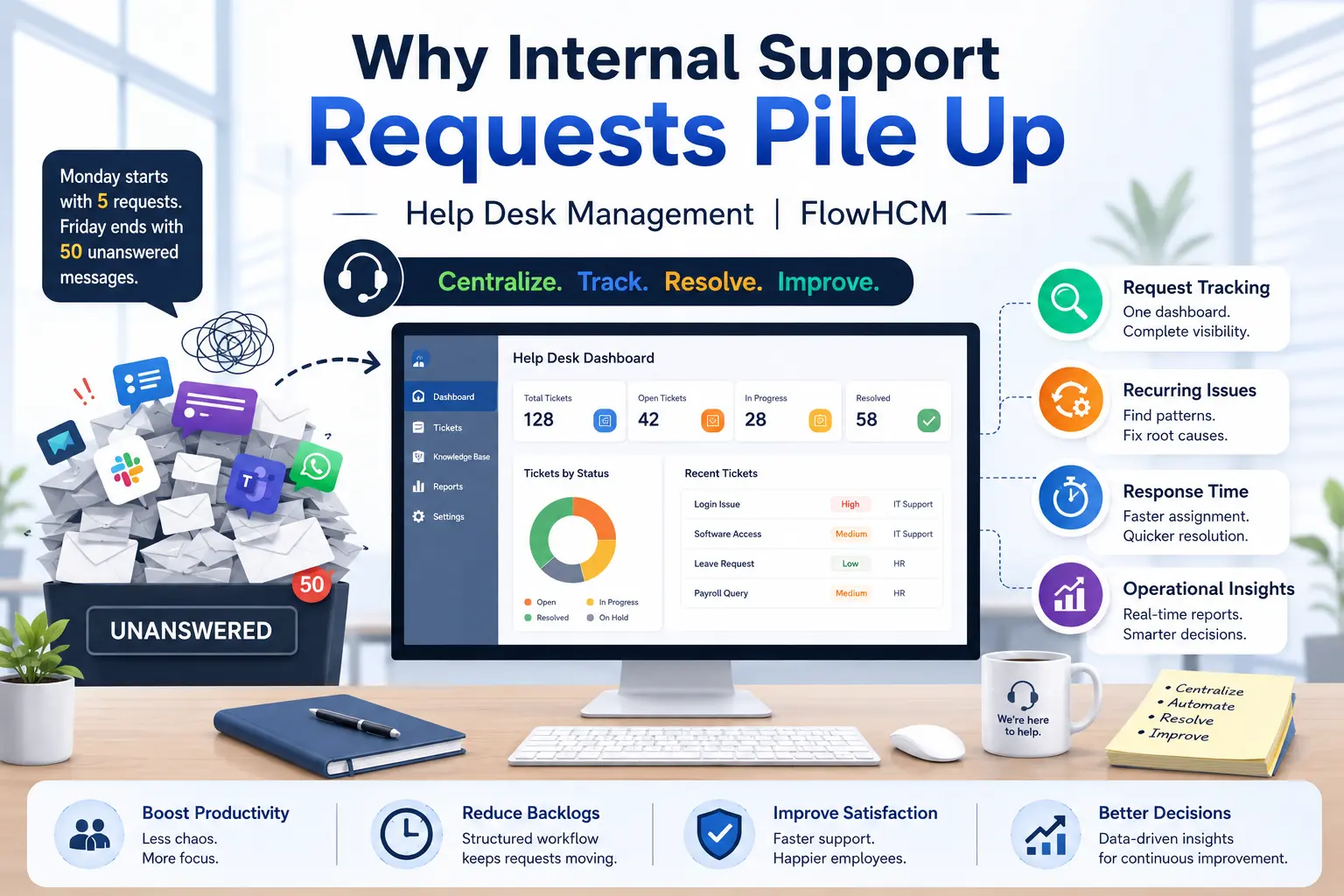
Monday starts with five support requests. Friday ends with fifty unanswered messages.
Your internal support requests pile up because workplace communication is scattered everywhere. Employees send urgent inquiries through private chats, group threads, and cluttered email inboxes. This chaotic habit creates silent bottlenecks across departments. Important tasks drop out of sight without an internal ticketing system. Support specialists waste precious time chasing context rather than solving operational problems.
Disorganized communication channels hide systemic issues that stifle your company’s overall output. Hours of workplace productivity are lost to sudden technical incidents every month. Answering questions in isolation prevents support staff from spotting patterns. No one notices when dozens of employees hit the same system error in a single week. Help Desk Management System automates this broken approach by turning every inquiry into a tracked ticket. Centralizing these requests helps you catch recurring friction early and automate routine handoffs.
Key Support Challenges Solved
- Request Tracking: Shifts support from scattered personal email inboxes to a unified, shared dashboard.
- Recurring Issues: Shifts from repeatedly fixing isolated problems to permanent root-cause resolutions.
- Response Time: Replaces manual handoff delays with structured ticket assignment.
- Operational Insights: Transforms total lack of ticket visibility into real-time reporting on service performance.
Request Disappearance in Emails and Chats
IT and HR queries disappear in informal communication channels because chat apps lack clear ownership of requests. Private messages and group threads work well for quick check-ins. However, they fail when managing multi-step tasks. Relying on informal chats introduces critical operational risks to your business.
- Zero Request Visibility
Support managers cannot track who is working on an issue or whether a task remains open. - Lost Accountability
Messages dropped into public group chats lack assigned owners, so urgent tasks get ignored. - Duplicate Effort
Multiple support personnel waste time resolving the same issues because past answers remain locked in private chat histories. - Delayed Response Times
Workplace productivity stalls while staff scrolls through long message threads to locate missing context.
Using email or chat as a makeshift employee service desk hides the strain on the workforce from leadership. Managers cannot measure resolution speeds or distribute tasks fairly across departments. Moving toward an automated ticketing system brings complete structure to daily service requests. This transition gives your HR and IT teams full control over their workflows.
The Hidden Cost of Quick Fixes
Your organization loses significant productive hours when teams patch repeated problems instead of fixing root causes. Quick surface-level fixes leave the underlying operational failure intact. Answering the same password reset or document request hundreds of times steals high-value hours. Support specialists should spend that time on strategic improvements instead.
This endless cycle of quick fixes drains both support staff and everyday employees. Support teams stay trapped in constant firefighting mode. Employees grow tired of waiting for help on basic tasks. These daily friction points drag down business output and erode trust in internal support departments.
Identifying recurring issues through ticket reports in a ticketing system transforms how your support personnel operate.
- Identify High-Volume Requests
Support managers analyze ticket trends to catch frequent technical failures and common policy questions. - Update Self-Service Resources
Recurring questions trigger instant updates to internal knowledge bases and step-by-step guides. - Refine Operational Workflows
Systemic software issues lead to permanent platform fixes, preventing future disruptions across all departments.
Addressing root causes converts your support operations into a proactive business asset. Implementing automated workflows and root cause tracking significantly reduces overall ticket backlogs. Your support team builds long-term solutions that keep your entire business running smoothly.
Operational Restoration Through Centralized Help Desk Management
Help Desk Management restores workplace productivity by routing every incoming ticket to a single, organized dashboard. The system assigns clear owners, sets priority levels, and provides real-time progress updates. Bringing all employee requests into one hub allows support teams to resolve issues without losing context.
Leadership Analytics and Response Monitoring
Centralized ticket data gives leadership real-time clarity into daily operational health through dedicated dashboards. Managers can instantly monitor ticket volumes and evaluate resolution performance across departments. They can fix workflow bottlenecks before those delays disrupt broader business operations. This visibility helps executive teams balance workloads fairly and ensure critical issues receive prompt attention.
Ticket Deflection via Self-Service Portals and AI Automation
Modern platforms reduce ticket strain by empowering employees to solve simple issues independently. Most staff naturally prefer quick self-service answers over waiting in support queues. A well-maintained knowledge base significantly reduces overall request volume. Furthermore, integrating AI-powered support bots can resolve simple requests instantly, cutting ticket backlogs and accelerating resolution times.
Deploying a dedicated employee service desk changes how your departments collaborate. HR and IT teams free up energy for big-picture strategic goals when routine tasks move through automated channels. Modern platforms consolidate HR requests and employee services into one clean portal, turning support a predictable function.
Key Steps to Build a Sustainable Support Workflow
A sustainable internal support workflow blends automated ticket routing with clear service guidelines to solve employee issues quickly. Building a successful service model requires setting realistic response targets. Teams must assign clear task ownership and provide employees with simple tools to lodge requests.
To keep your internal support engine operating efficiently, your leadership team should adopt proven best practices.
- Standardize Intake
Require all staff to submit issues through a single central employee support portal rather than via informal chat threads.
- Set Clear Priorities
Categorize incoming requests by urgency level. Critical technical outages receive immediate attention before routine questions.
- Assign a Single Ticket Owner
Prevent confusion and lost requests by ensuring every ticket has a single designated owner responsible from intake through resolution.
- Maintain Complete Ticket History
Keep every request, update, and resolution in a single centralized record, allowing support teams to reference past cases and resolve similar issues more efficiently.
- Enable Seamless Escalation and Visibility
Allow staff to loop in their manager or subordinates directly on tickets to speed up approvals and maintain full team visibility.
- Review Support Metrics Regularly
Evaluate monthly ticket reports to adjust staffing levels, update company policies, and refine staff training.
Establishing a clean support model removes daily operational friction and improves overall job satisfaction. When staff knows their technical and HR needs will be handled quickly, company-wide productivity naturally rises.